






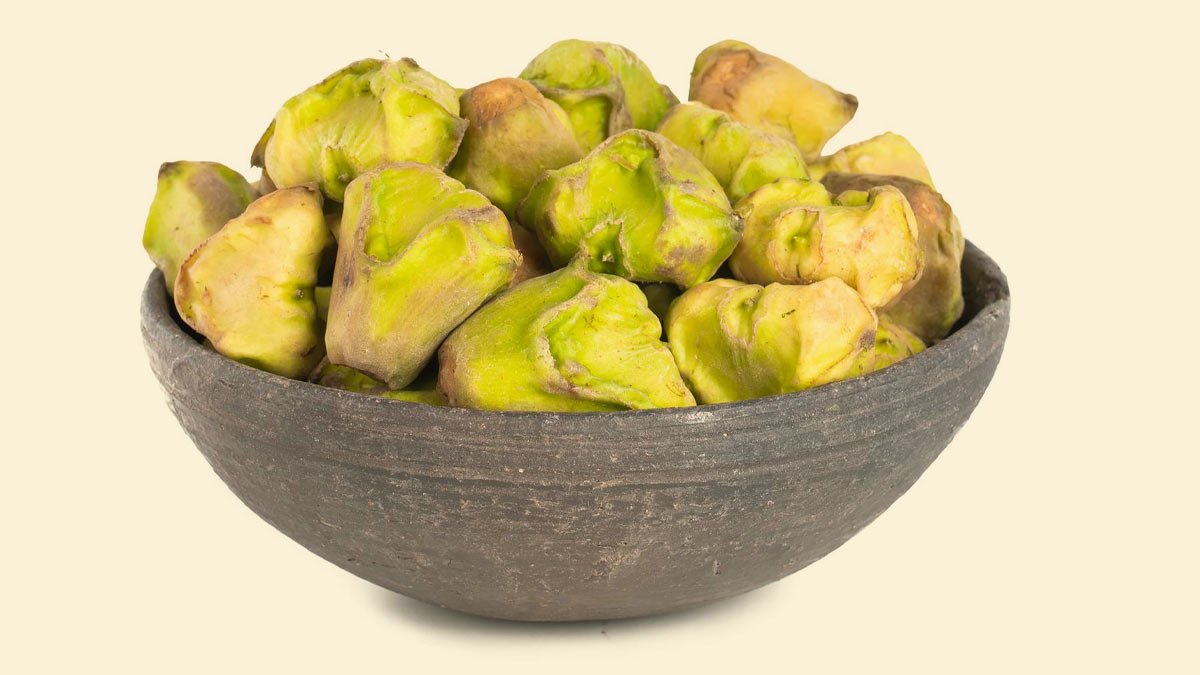
In the winter season Water Chestnut, the market is very popular. This tuber that grows in water is known for its unique taste and properties.
In Ayurveda, it has been described as a nutritious and cooling tuber, which is very beneficial for removing weakness, improving digestion, balancing body heat and heart health. While nutritional science also considers the Singhara a healthy superfood due to its high-fiber and antioxidant content.
According to a study published in ‘The Journal of Phytopharmacology’ (TJP), the tuber is also rich in micronutrients like manganese, copper and vitamin B6, which help in improving digestion, improving gut health, and balancing cholesterol and blood sugar.
So, today in work news, we will talk about the Health Benefits of the Water Chestnut. Along with this, we will know that-
What nutrients are found in Singhara?
Can eating too many Water Chestnut causes any Side effects?
Which people should not eat Water Chestnut?
Expert: Dr. Poonam Tiwari Senior Dietician, Dr. Ram Manohar Lohia Institute of Medical Sciences, Lucknow.
What nutrients are found in Singhara?
According to the United States Department of Agriculture (USDA), antlers contain essential minerals like fiber, Potassium, Magnesium, Manganese, Phosphorus, and Copper. They are also a good source of Vitamin B6, Vitamin E, and Vitamin C.
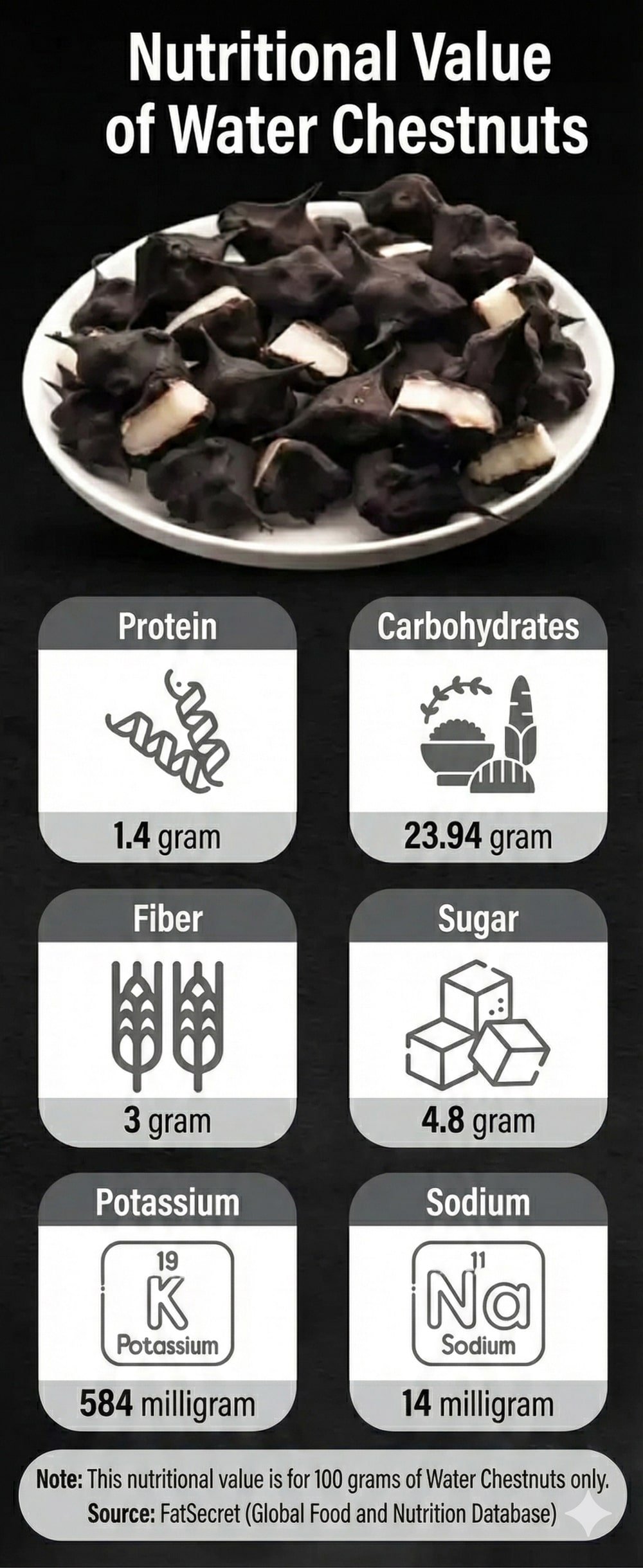
Along with this, Singhara are almost fat-free and provide instant energy with low calories. Overall, the excellent combination of vitamins, minerals, antioxidants, and fiber makes antlers a winter superfood. Understand the nutritional value of 100 grams of Water Chestnut from the Graphic given below-
How beneficial are Water Chestnut for our health?
The fiber, potassium, antioxidants, and vitamin C present in Singhara help in improving digestion, controlling blood sugar, keeping the body energized, and supporting heart health. Its high-water content keeps the body hydrated, while antioxidants help reduce swelling and protect against cell damage.
Being low in calories and gluten-free, Singhara is also beneficial for weight loss, skin health, and gut health. Its regular and balanced intake reduces the risk of many diseases.
According to a study published in the International Journal of Plant and Soil Science (IJPSS), Singhara offers a variety of health benefits due to its rich nutrition and phytochemical profile. Understand it with the graphics given below-

Which Water Chestnut is more beneficial to eat, raw or boiled?
Water Chestnut is nutritious in both forms. The nutrients are more preserved in raw Water Chestnut. Its natural sweetness is retained. While steaming can reduce it. However, steaming makes it lighter and easier to digest. This is good for people who have problems with poor digestion, gas or bloating. Boiling removes bacteria or soil impurities, so it is considered safer. It can be eaten both ways. Always eat it fresh and thoroughly washed.
How can you include Water Chestnut in your diet?
Singhara can be included in your diet in many ways, raw, boiled, roasted or in the form of flour. Such as-
- Raw, peeled
- Steamed or lightly roasted
- Added to salads or fruit chaat
- Added to vegetables
- Stir-fried
- Added to Smoothies, kheer and desserts
- Making rotis, Cheela, Pakodas or fasting dishes from Water Chestnut
Are there any side effects of eating too many Singhara?
Water chestnuts are generally safe and healthy food, but eating too much of them can cause problems for some people. It has some possible side effects. Such as-
- Eating too much of them can cause digestive problems for some people.
- Singhara are a low-glycemic index food, however, eating too much of them can cause a slight increase in blood sugar due to the carbohydrates.
- Some people may also be allergic to Singhara.
- If Singhara are taken directly from water and not cleaned properly, the bacteria or dirt present in them can cause an upset stomach.
- People with poor kidney function can be harmed by too much potassium.
How many Water Chestnuts are safe to eat in a day?
Senior Dietician Dr. Poonam Tiwari says that eating 8-10 (raw or boiled) Water Chestnuts daily is enough for a healthy person. Food made from Singhara flour is also okay during the fast, but not more than 2 rotis or 1 bowl of halwa.
Can diabetic patients also eat Water Chestnuts?
Yes, diabetic patients can eat Water Chestnuts, but always in limited quantities. The glycemic index (GI) of Singhara is low. Therefore, its carbohydrates are released slowly, which does not cause a rapid increase in blood sugar. But it should be taken only in limited quantities.
Can Water Chestnuts be given to children?
Dr. Poonam Tiwari says that yes, it can be given to older children. It would be better to give them boiled Water Chestnuts or things made from its flour, so that there is no risk of choking. For older children, 2–3 boiled antlers are enough.
Which people should not eat Water Chestnuts?
Although Water Chestnuts are safe for Everyone, some people should eat them with caution or not at all.
Such as-
- People suffering from kidney disease.
- People with food allergies.
- People with chronic digestive problems.
- Raw antlers should not be given to young children.
- People who have been taking medication for a long time should definitely consult a doctor before giving antlers.
What things should be kept in mind while buying Water Chestnuts?
Often, bad Water Chestnuts are found in the market. In such a situation, take special care of some things while buying them. Such as-
- Choose only hard and strong antlers. Soft, pressed or watery Water Chestnuts may be stale.
- Its outer surface should be smooth and uniform in color. Do not buy if you see black spots, fungus or cracks.
- Fresh antlers have dry skin and are easily recognizable when you hold them in your hand.
- Avoid antlers with dirty water.
- Antlers that are light in weight and look hollow may be dry inside, so do not buy them.
If you are Buying Singhara flour, be sure to check the manufacturing date, packaging and brand reliability.